
Private construction slumps in September as economy cools
By Manila Bulletin Newsroom | Nov 21, 2025
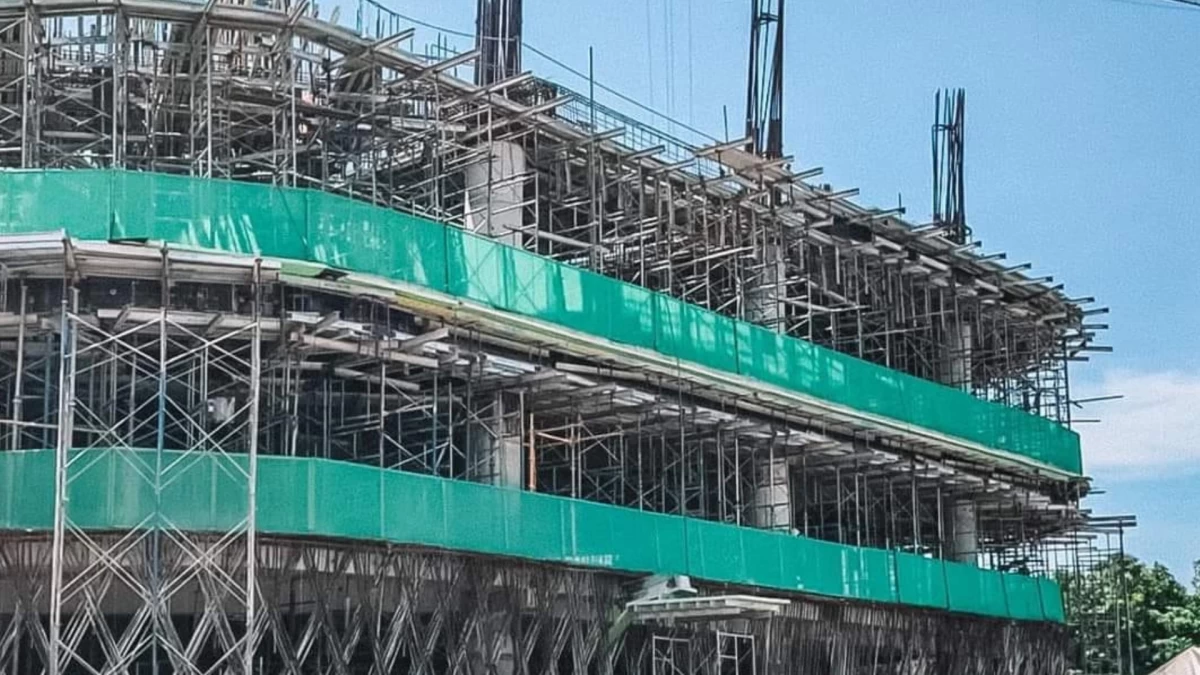
(PHOTO: MANILA BULLETIN)
Private construction activity in the Philippines weakened in September as the country’s economic growth slowed to a 4.5-year low of four percent in the third quarter, according to the latest preliminary data from the Philippine Statistics Authority (PSA).
PSA data released on Tuesday, Nov. 18, showed a 25-percent year-on-year drop in approved building permits—used as a proxy for private construction activity—in September. The total number of projects reached 11,746 that month, down from 15,663 in the same period last year. This followed the 0.6-percent decline recorded in the previous month, when approved projects totaled 14,546.
In terms of total value, PSA data showed that private construction projects in September amounted to ₱45.14 billion, reflecting an annual drop of 16.1 percent from the ₱53.78-billion value of constructions posted in the same month of the previous year. In August, it recorded an increase of 16.2 percent, amounting to ₱59.72 billion.
As for total floor area, the PSA reported that the 3.19 million square meters (sqm) covered by building permits approved in September fell from 3.72 million sqm in the same month last year. In contrast, the floor area recorded in the previous month posted an annual increase of 15.1 percent, reaching 4.13 million sqm.
The data also showed that residential buildings led the month with 7,209 approved projects valued at ₱19.94 billion, accounting for more than three-fifths of the total construction value in September 2025. However, this was lower than last year’s 10,379 projects and the 9,901 recorded in the previous month.
The bulk of residential constructions consisted of single-detached houses, which accounted for 6,131 constructions or 85 percent of total.
Non-residential followed with 2,782 total projects valued at ₱19.02 billion, accounting for 23.7 percent of all construction activities for the month. This was lower than the 3,289 projects recorded in the same period last year and the 2,889 posted in the previous month.
Commercial buildings made up the majority of non-residential projects, totaling 1,808 or 65 percent of all such constructions.
Despite residential projects having a higher count and total value, PSA data showed that non-residential constructions covered a larger floor area. Non-residential projects accounted for 1.84 million sqm, compared to 1.28 million sqm for residential constructions. Both segments recorded annual declines of 7.1 percent for non-residential and 24.6 percent for residential floor areas for the month.
The PSA also reported that construction values for additions, alterations and repairs, and other types of projects amounted to ₱0.61 billion (1.4 percent), ₱2.86 billion (6.3 percent), and ₱2.7 billion (six percent), respectively. Year-on-year, the value of additions to existing structures and other construction works climbed by 38.6 percent and 30.2 percent, respectively. In contrast, spending on alterations and repairs declined by 8.4 percent over the same period.
“The 25-percent drop in private construction in September reflects both current conditions and a natural cyclical slowdown. High borrowing costs, softer demand for big-ticket projects, and still-elevated material prices may have all weighed on activity, and these pressures typically show up late in an interest-rate cycle,” Robert Dan Roces, group economist at Sy-led conglomerate SM Investments Corp. (SMIC), told Manila Bulletin on Friday, Nov. 21.
Given that gross domestic product (GDP) growth eased to four percent in the third quarter, he added that “this contraction was not unexpected,” noting that “private construction is one of the most rate-sensitive and cyclical parts of the economy, and it usually stabilizes once financing conditions ease and confidence improves.”
Michael Ricafort, chief economist at Rizal Commercial Banking Corp. (RCBC), said the decline was largely due to weather-related disruptions, which reduced the number of working days and led to the temporary closure of government offices in hard-hit areas due to natural calamities. These disruptions, he explained, affected the processing of construction permits and other construction-related activities.
It was “consistent with the slowest GDP growth in 4.5 years, or since the first quarter of 2021, and the 0.5-percent year-on-year decline in construction,” he added.
Ricafort added that the ongoing impact of the Philippine offshore gaming operators (POGO) ban and exits since late 2024 has pushed up vacancy rates across office, residential, and commercial properties. The resulting oversupply has dampened demand for new developments, particularly in areas most affected by the POGO sector’s decline.
“The recent political noise also partly weighed on investor sentiment, especially for big-ticket items such as property and other construction-related activities,” he added.
Source: Manila Bulletin